 Sisu the Hedgehog
Episode 8 · Season 2 · Winter
Who Made These Tracks in the Snow? Animal Tracks for Kids
The short answer
Every animal leaves its own kind of tracks in the snow. By looking at the shape of the footprints, you can guess who walked there. A hare's big back feet land in front of its little front feet, and a bird's footprint shows its toes.
Read it out loud: it's written for a four-year-old.
Explaining it to your child
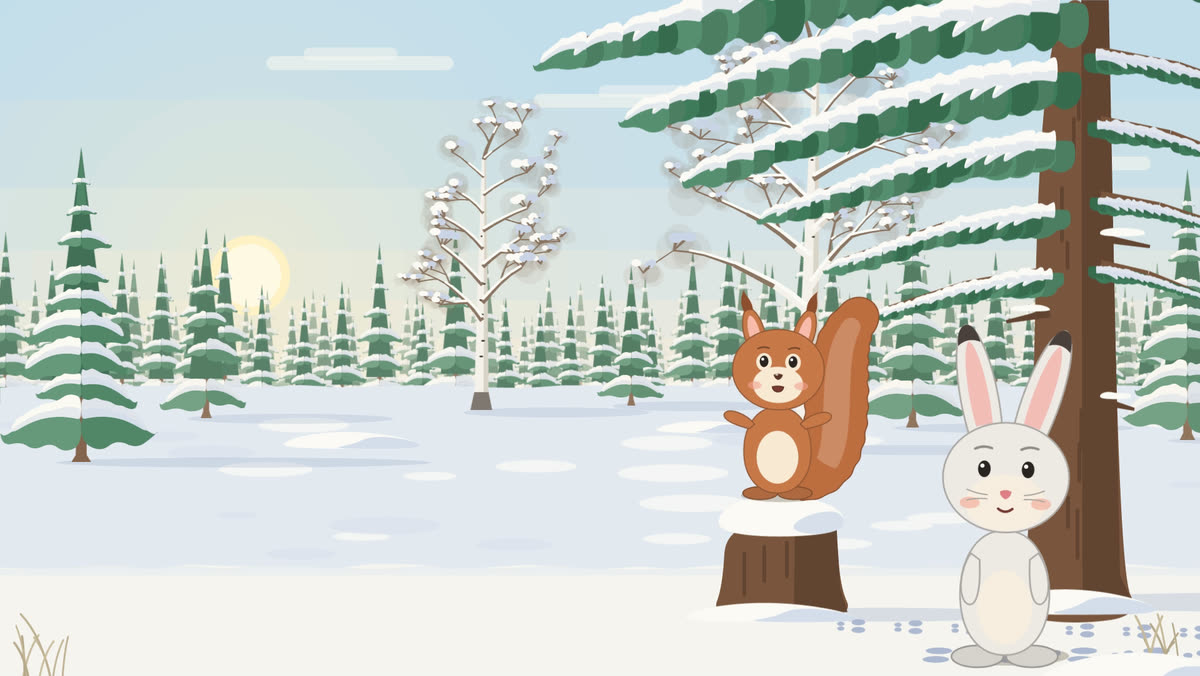
Sisu is fast asleep until spring, and Pupu is looking after Sisu's spruce. One snowy morning Pupu finds little tracks in the snow and wonders if the snow grew little feet! Following them leads to someone new: Kurre the red squirrel.
Footprints tell a story
Fresh snow keeps a record of everyone who passed by. Different animals have different feet and move in different ways, so their tracks look different. The chorus says it simply: "The footprints tell you who it could be."
The hare: back feet in front
This one surprises grown-ups too. When a hare hops, its long back legs swing past its front legs. So in the snow you see two small front-foot prints behind, and two long back-foot prints in front. It looks backwards, but it isn't.
The squirrel: from tree to tree
A red squirrel hops the same way, so its tracks come in little groups of four. But squirrel tracks usually run from one tree to the next, because that's where the squirrel lives and hides its food. Squirrels stay awake all winter, which is why Kurre is out and about while Sisu sleeps.
The bird: toes
A little bird leaves tiny prints that show its toes: three pointing forwards and one pointing back. Look for them under a bird feeder.
Quick guide: whose tracks are these?
Six tracks you are likely to find, described the way a small child can check them.
- Hare or rabbit: groups of four. Two long prints side by side in front, two small ones behind.
- Squirrel: groups of four in a little square, leading from one tree to another.
- Small bird: thin prints with three toes forward and one back, often in pairs because the bird hops.
- Deer: two long toe prints side by side, like an upside-down heart.
- Fox: a neat, straight line of small oval paw prints, one in front of the other.
- Mouse: tiny prints in pairs, sometimes with a thin line between them from the tail.
A dog's tracks wander about. A wild animal usually walks in a straighter line, because it is saving energy.
And your own tracks
At the end of the episode Pupu finds some tracks that look very familiar. Children love discovering that they leave tracks too, and that boots, bare paws and bird feet all tell a different story.
What the episode teaches
- every animal leaves its own kind of tracks in the snow
- when a hare hops, its big back feet land in front of its little front feet
- a red squirrel hops too, from tree to tree, and stays awake all winter
- a bird's footprint shows its toes
Watch the episode
Grandma Owl answers the question with a song, Footprints in the Snow. The whole episode is about 3 minutes long, calm and quiet. The song starts at 0:59.
Premieres Friday 8 January 2027
The episode comes out on YouTube on 8 January. Subscribe to see it first.
Sisu on YouTubeTry it together: go on a track hunt
The best time is the morning after fresh snow.
- Walk slowly and look down. Fresh tracks are sharpest near bushes, trees and bird feeders.
- For each set, ask: big or small? Toes or no toes? In a row or in little groups?
- Look for the hare pattern: two long prints in front, two small ones behind.
- Make your own tracks: walk, tiptoe, hop with both feet and jump. Then look back. Which tracks are yours?
Take a photo or draw the tracks when you get home, and guess together who made them.
Sing along: Footprints in the Snow
Who was here? Look and see,
the footprints tell you who it could be.
Big feet, little feet, all in a row,
everyone leaves their own tracks in the snow!
The chorus from the episode. Sing it slowly; little ones love the repeats.
Printables to go with it
The Winter Wonders Pack has 29 pages of colouring, song lyrics and little winter experiments for the winter episodes. It's $5, and you can print it as often as you like.
Questions parents ask
Why do a hare's back feet land in front of its front feet?
When a hare hops, its long back legs swing forward past its front legs. So the big back-foot prints end up in front of the small front-foot prints.
How can you tell squirrel tracks?
Squirrel tracks come in small groups of four, like a tiny hare's, but they usually lead from one tree to another.
What do bird tracks look like?
Little bird footprints show the toes: three pointing forwards and one pointing back. You'll often find lots of them under a bird feeder.
How do you identify animal tracks in the snow?
Look at three things: the size of the prints, whether you can see toes, and the pattern they make. Groups of four mean a hopping animal like a hare or squirrel, a straight single line often means a fox, and two long toes side by side mean a deer.
When is the best time to look for animal tracks?
The morning after fresh snow, when the tracks are new and sharp. Look near trees, bushes, hedges and bird feeders.
Related questions
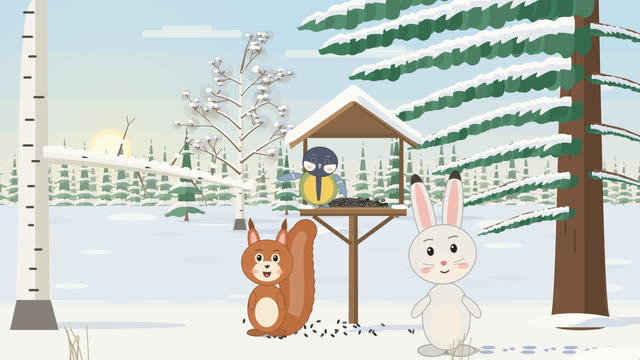
Sisu the Hedgehog is a calm animated series for ages 3–6: Sisu the little hedgehog asks a big question about nature, Pupu the bunny guesses, and Grandma Owl sings the answer. The characters' voices and the music are made with synthetic voice and audio tools. More questions · All episodes on YouTube