 Sisu the Hedgehog
Episode 3 · Season 1 · Autumn
Why Do Bunnies Have Such Long Ears? A Simple Explanation for Kids
The short answer
Long ears are like big listening cups. They help a hare hear tiny sounds from far away, like a twig snapping. Hearing early who is coming helps the hare stay safe.
Read it out loud: it's written for a four-year-old.
Explaining it to your child
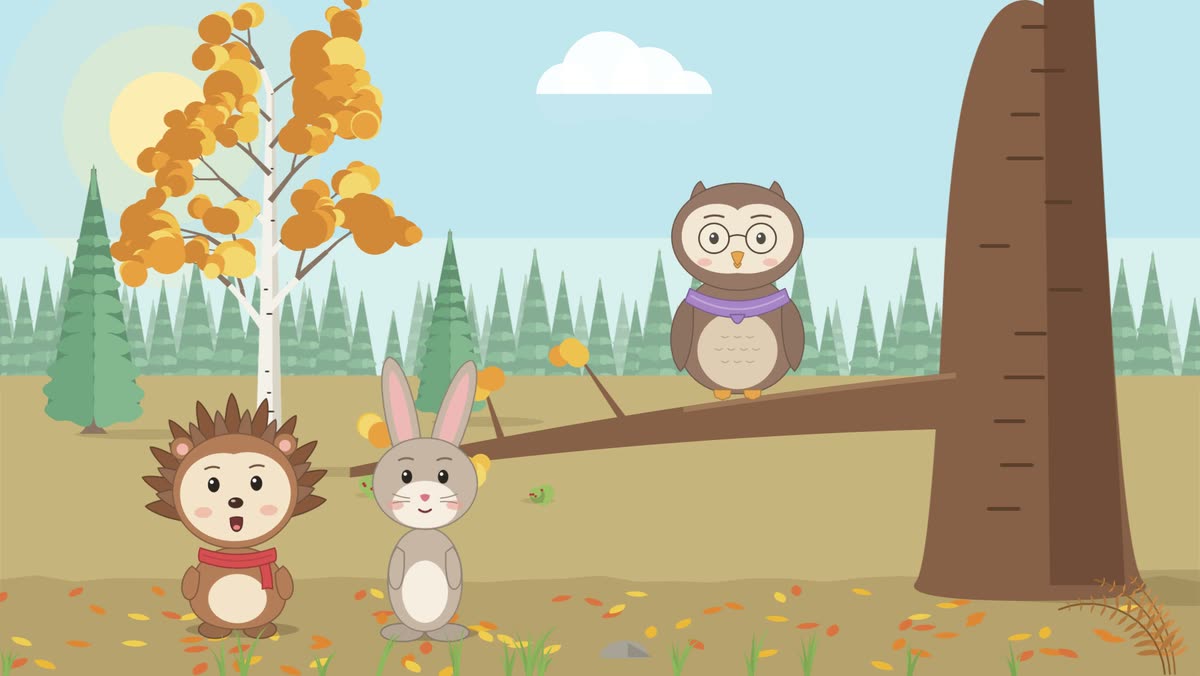
In the episode Pupu can hear Grandma Owl humming far, far away, and Sisu can't hear a thing. That's the whole idea in one moment: Pupu's long ears hear more.
Long ears catch more sound
Pupu is a mountain hare, a wild cousin of the rabbit, but the answer is the same for both. Big, long ears catch more sound than small ones, a bit like cupping your hands behind your own ears. That lets a hare hear quiet sounds, such as a twig snapping, from a long way off.
Ears that turn
Hares and rabbits can turn their ears towards a sound, even one ear at a time. So a hare can listen in two directions while it sits still and nibbles. If it hears something worrying, it has time to hop away.
Every body helps in its own way
The song widens the question in a way small children love: every animal's body helps it.
- An owl's big eyes help it see in the moonlight.
- A hedgehog's spikes help it stay safe: it rolls into a spiky ball.
- A hare's long ears help it hear far away.
Then the chorus turns it back to your child: "Every friend has something new, and something special, just like you!" A nice follow-up question is: "What does your body help you do?"
What the episode teaches
- long ears help a hare hear a twig snap far away
- an owl's big eyes see in the moonlight
- a hedgehog rolls into a spiky ball to stay safe
Watch the episode
Grandma Owl answers the question with a song, Big or Small. The whole episode is about 2.5 minutes long, calm and quiet. The song starts at 0:45.
Try it together: take a listening walk
A listening walk works in a forest, a park or even a balcony.
- Stand still together and close your eyes for a slow count of ten.
- Count on your fingers every sound you hear: a bird, a car, the wind, a dog.
- Now make "bunny ears": cup your hands behind your ears and listen again. Do the sounds seem louder?
- Turn slowly while you listen. Can you point to where a sound is coming from?
At home, try a whisper game: one person whispers from across the room, the other listens with and without "bunny ears".
Sing along: Big or Small
Big or small, short or tall,
our bodies help us, one and all.
Every friend has something new,
and something special, just like you!
The chorus from the episode. Sing it slowly; little ones love the repeats.
Printables to go with it
The Forest Wonders Pack has a colouring page for every first-season episode, the lyrics to all six songs, an autumn leaf hunt, a winter track hunt and nature "wonder cards" for walks. It's free.
Or print a free colouring page and leaf hunt right now: A4 · US Letter
Questions parents ask
What's the difference between a rabbit and a hare?
They're close cousins. Hares are usually bigger, with longer legs, and they live in the open rather than in burrows. Baby hares are born with fur and open eyes, while baby rabbits are born without fur. Pupu is a mountain hare.
Can bunnies really move their ears?
Yes. Rabbits and hares can turn their ears towards a sound, and they can move each ear on its own.
Why do owls have such big eyes?
Big eyes let in more light, so an owl can see when it's quite dark. That's why Grandma Owl is awake at night.
Why does a hedgehog roll into a ball?
To stay safe. When a hedgehog is scared, it tucks in its face and legs and becomes a round ball of spikes.
Related questions
Sisu the Hedgehog is a calm animated series for ages 3–6: Sisu the little hedgehog asks a big question about nature, Pupu the bunny guesses, and Grandma Owl sings the answer. The characters' voices and the music are made with synthetic voice and audio tools. More questions · All episodes on YouTube