 Sisu the Hedgehog
Episode 11 · Season 2 · Winter
Where Do Fish Go in Winter? A Simple Explanation for Kids
The short answer
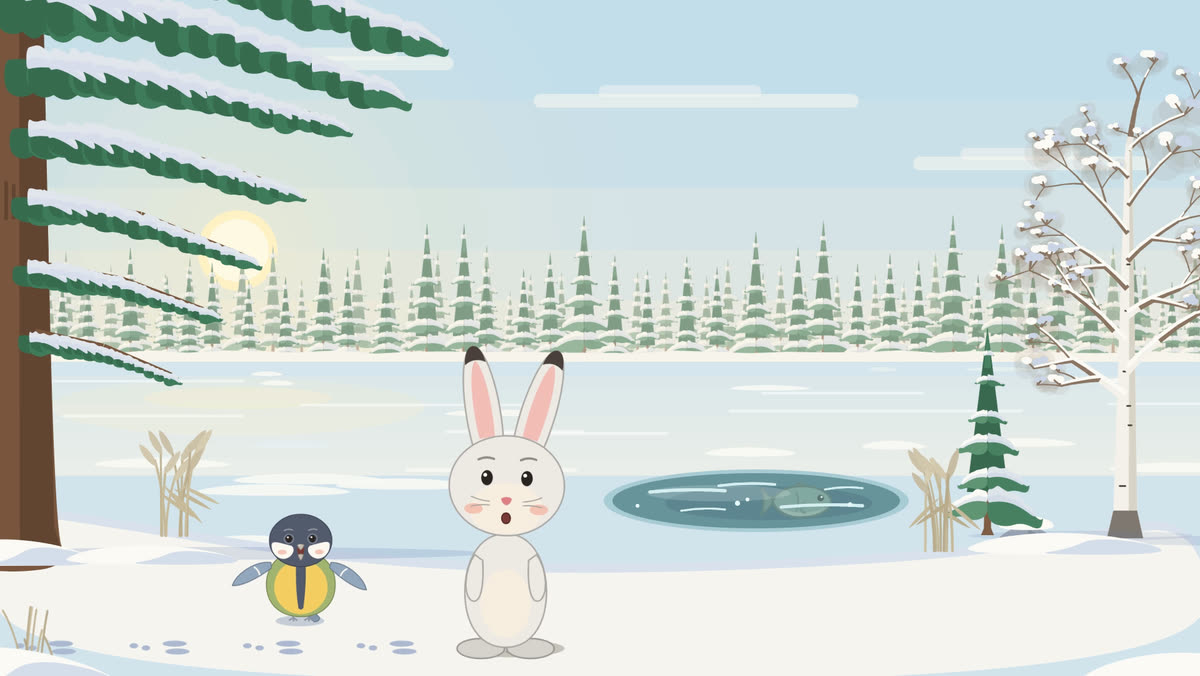
The fish are still in the lake, under the ice. Ice floats on top of the lake like a lid, and the water underneath doesn't freeze. The fish rest down near the bottom, where the water is a little less cold, and swim slowly until spring.
Read it out loud: it's written for a four-year-old.
Explaining it to your child
In summer, Sisu and Pupu watched the little fish in the lake. So today Pupu goes to see them, but the lake is all frozen! Did the fish fly south with the birds? Tiitu the great tit has a better idea: look under the ice.
Ice floats
Ice is lighter than water. That's why an ice cube floats in a glass, and it's why ice on a lake stays on top. Grandma Owl calls it "a lid of ice".
Lakes freeze from the top down
When winter comes, the lake freezes at the top first, where it meets the cold air. The ice lid then keeps the water underneath from getting as cold as the air. A deep lake doesn't freeze all the way to the bottom, so the fish still have water to live in.
The bottom is a little less cold
The deepest water in a lake stays a little less cold than the rest, at about 4 °C. Water at that temperature is the heaviest, so it sinks and stays down there. That makes the bottom a cosy spot, and that's where the fish go. "Down near the bottom, quiet and deep, they rest all winter, almost asleep."
Slow and sleepy fish
In cold water fish slow right down. They move very little and need very little food, and they rest like this until spring warms the lake. At the end of the episode Pupu tells the sleeping Sisu all about it: the fish are resting, just like Sisu.
Ice is not for walking on alone
The episode is clear about this, and it's worth repeating at home: we never go on the ice without a grown-up.
What the episode teaches
- ice is lighter than water, so it floats on top of the lake like a lid
- the lake freezes from the top down, and the water under the ice doesn't freeze
- the deepest water is a little less cold, so the fish rest near the bottom
- in the cold water the fish swim slowly and rest all winter, until spring
- we never go on the ice without a grown-up
Watch the episode
Grandma Owl answers the question with a song, Under the Ice. The whole episode is about 3 minutes long, calm and quiet. The song starts at 1:12.
Premieres Friday 29 January 2027
The episode comes out on YouTube on 29 January. Subscribe to see it first.
Sisu on YouTubeTry it together: make a little frozen lake
Two small experiments to do at home, no frozen lake needed.
- Drop an ice cube into a glass of water. Does it sink or float? (It floats, just like the ice on a lake.)
- On a frosty evening, put a bowl of water outside. Check it in the morning. Is the top frozen? Tap gently: is there still water underneath?
- Put a small toy fish or a pebble in the bottom of a bowl before it freezes and see what happens to the top first.
- Talk about the lid: the ice on top, the water below, and the fish resting near the bottom.
Safety: look at real frozen lakes from the shore. Never go on the ice without a grown-up, and only where adults know the ice is safe.
Sing along: Under the Ice
Under the ice, under the snow,
the fish swim slowly, nice and slow.
Down near the bottom, quiet and deep,
they rest all winter, almost asleep.
The chorus from the episode. Sing it slowly; little ones love the repeats.
Printables to go with it
The Winter Wonders Pack has 29 pages of colouring, song lyrics and little winter experiments for the winter episodes. It's $5, and you can print it as often as you like.
Questions parents ask
Do fish freeze in winter?
No. A lake freezes from the top, and in a deep lake the water under the ice stays liquid. The fish live in that water until spring.
Why does ice float?
Ice is lighter than the same amount of water, so it floats on top, just like an ice cube in a drink.
Do fish sleep in winter?
Not quite like a hedgehog, but they slow right down. In cold water they move slowly, eat very little and rest near the bottom of the lake.
Is it safe to walk on a frozen lake?
Only with an adult who knows the ice is thick enough. Children should never go on ice on their own. It's safest to watch frozen lakes from the shore.
Related questions
Sisu the Hedgehog is a calm animated series for ages 3–6: Sisu the little hedgehog asks a big question about nature, Pupu the bunny guesses, and Grandma Owl sings the answer. The characters' voices and the music are made with synthetic voice and audio tools. More questions · All episodes on YouTube