 Sisu the Hedgehog
Episode 13 · Season 2 · Winter
Why Do Icicles Grow? How Icicles Form, Explained for Kids
The short answer
The sun warms the snow on the roof, and the melted water drips down. At the cold edge of the roof, the cold air freezes each drop. Drop by drop, layer by layer, the icicle grows longer.
Read it out loud: it's written for a four-year-old.
Explaining it to your child
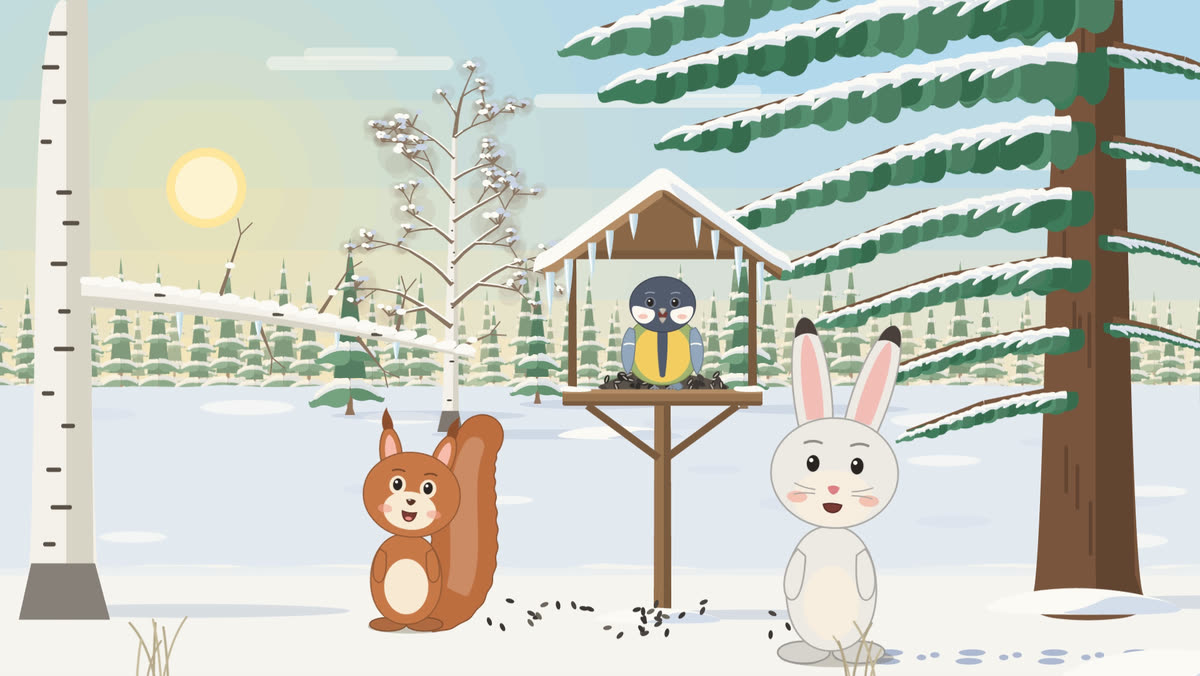
Today the sun feels a little warm. At the bird feeder Kurre and Tiitu show Pupu the icicles on the roof: they get a little longer every day! Maybe they're ice carrots, growing upside down? But they're dripping. How can an icicle drip and grow at the same time?
Melting at the top
In late winter the sun climbs higher in the sky and shines more strongly. It warms the snow on a roof, and some of it melts. The water runs down to the edge of the roof. "The snow up on the roof gets warm, and little drops of water form."
Freezing at the edge
Out at the edge of the roof the air is still freezing cold. As each drop of water hangs there, some of it freezes. The next drop runs down over the ice and freezes too. Drop by drop, layer by layer, the icicle grows longer. Some water drips off the tip, and that's the dripping Pupu noticed. The icicle drips and grows at the same time.
Icicles need sun and frost
To grow icicles you need two things together: sunny days that melt the snow, and cold air that freezes the water again. In Finland that's typical of February and March. So icicles are a sign: "Icicles say the sun is strong, and spring is coming before long."
Step back from under icicles
Icicles are heavy and sharp, and they can fall without warning. In the episode Grandma Owl reminds everyone to step back from under the icicles. It's a good rule to practise with small children: we look at icicles from a safe distance, and we never stand right under them.
What the episode teaches
- the sun melts the snow on the roof, and the water drips down
- at the edge of the roof the cold air freezes each drop
- drop by drop, layer by layer, the icicle grows longer
- icicles need sunny days and cold air, and they tell us the sun is getting stronger and spring is on its way
- we never stand right under icicles
Watch the episode
Grandma Owl answers the question with a song, Drip, Drop, Icicle. The whole episode is about 3 minutes long, calm and quiet. The song starts at 1:07.
Premieres Friday 12 February 2027
The episode comes out on YouTube on 12 February. Subscribe to see it first.
Sisu on YouTubeTry it together: keep an icicle watch (from a safe distance)
This works on a sunny, frosty day in late winter.
- Find an icicle you can see from a window or from well away from the roof edge. Never stand underneath it.
- Take a photo, or draw it, at the same time each day. Is it getting longer?
- On a sunny afternoon, watch the tip. Is it dripping? On a cold, cloudy day, does it drip less?
- Make a mini icicle: hang a string outside on a frosty day and let a grown-up drip water slowly down it from a cup. Watch the ice build up.
Safety: grown-ups only near roof edges. Don't knock icicles down, and don't lick them.
Sing along: Drip, Drop, Icicle
Drip, drop, little icicle,
the warm sun melts the snow.
The cold air freezes drop by drop,
and that's how icicles grow.
The chorus from the episode. Sing it slowly; little ones love the repeats.
Printables to go with it
The Winter Wonders Pack has 29 pages of colouring, song lyrics and little winter experiments for the winter episodes. It's $5, and you can print it as often as you like.
Questions parents ask
How do icicles form?
The sun melts snow on a roof, the water runs to the edge, and the cold air freezes it a little at a time. Layer by layer, the icicle grows longer.
Why do icicles drip if they're growing?
Not all of the water freezes. Some of it freezes onto the icicle and makes it longer, and the rest drips off the tip.
When do icicles grow the most?
On sunny days when the air is still below freezing. In Finland that's typical of late winter, in February and March, when the sun is getting stronger.
Are icicles dangerous?
Yes, they can be. Icicles are heavy and sharp, and they can fall without warning, so never stand right under them. Look at them from a safe distance.
Related questions
Sisu the Hedgehog is a calm animated series for ages 3–6: Sisu the little hedgehog asks a big question about nature, Pupu the bunny guesses, and Grandma Owl sings the answer. The characters' voices and the music are made with synthetic voice and audio tools. More questions · All episodes on YouTube